ColabaseAI logoColabaseAI logoColabaseAI
  • Inspiration
  • History
  • Assets
  • Favorites
  • Generate
  • All Prompts
  • World Cup
  • Product & Brand
  • Poster Design
  • Photography
  • Illustration & 3D
  • Food & Drink
  • UI & Graphic
Terms of Service·Privacy Policy
Prompt

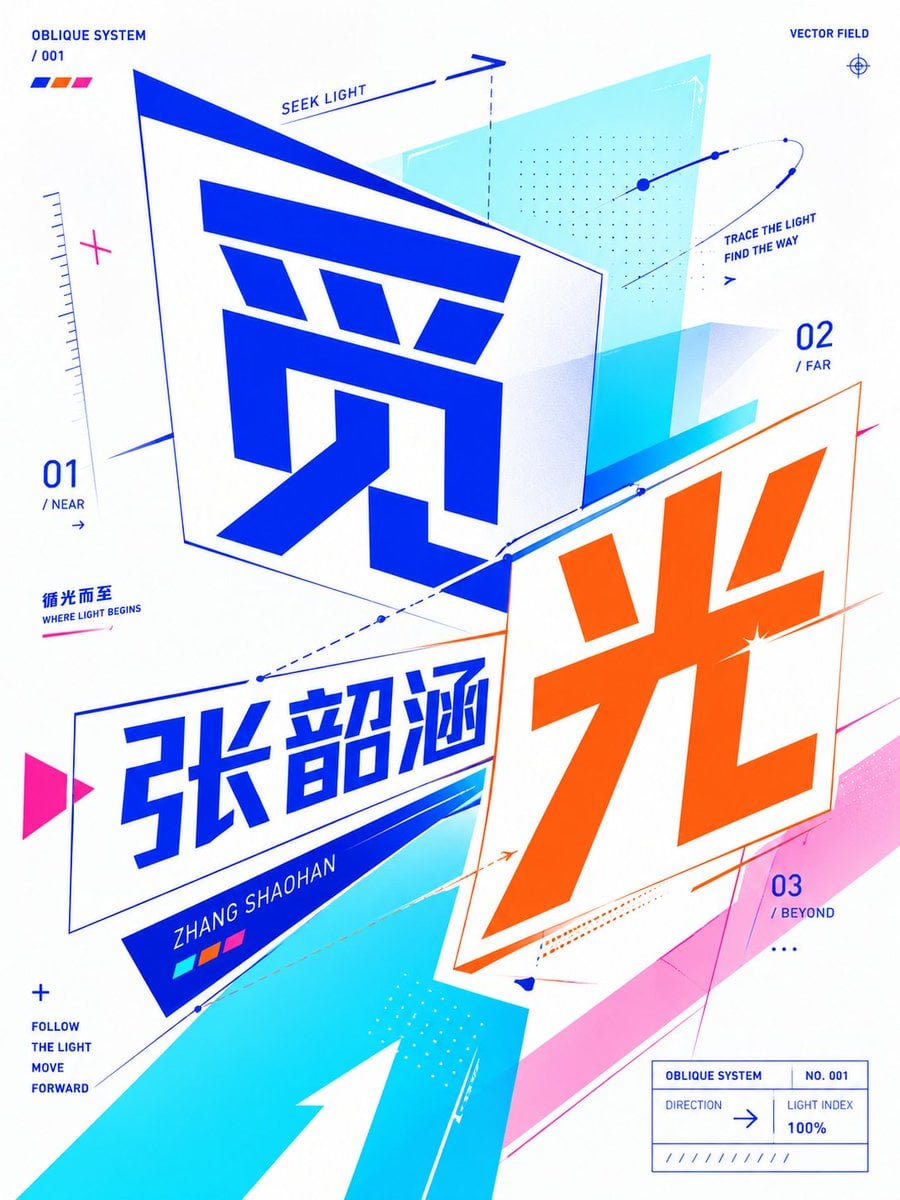
Oblique Planar Perspective Typographic Poster

Generated Image Preview

Oblique Planar Perspective Typographic Poster1 / 4
LC
Larus Canus
@MrLarus
HomepageView original post
5.4KViewsApr 27, 2026
Model / Categories / LicenseGPT ImagePoster DesignUI & GraphicCC BY 4.0

Brand Ad AI Image Prompt

Prompt

Please create a high-completion 'Oblique Planar Perspective Typographic Poster' based on the user's input of Core Text / Word / Phrase / Short Sentence / Letter. User input: Theme Text; Text Language: Chinese / English / Mixed Chinese-English; Optional Supplementary Context: ____; Optional Emotional Tendency: ____; Optional Disabled Elements: ____. This is not a regular illustration, not a simple text effect poster with enlarged text, nor traditional frontal flat-lay typography. Instead, it is a modern, experimental typographic poster with 'text as the primary visual core'. The overall design must adopt 'Oblique Planar Perspective Typography': text should not be entirely flat on the frontal plane, but rather appear as if placed on two-dimensional planes at different tilt angles. Through oblique baselines, perspective compression, plane deflection, angular cuts, staggered composition, vector pointing, directional lines, translucent geometric planes, and modular color blocks, it collectively establishes a typographic composition effect that 'remains planar design but possesses a clear sense of angle, spatial direction, visual tension, and vector relationships'. Please first truly understand the literal meaning, emotional tone, implied symbolism, cultural associations, psychological feelings, and semantic tension of the user's input content, then translate these understandings into a typographic poster system with 'directionality, oblique relationships, planar perspective, and visual confrontation / connection'. If the theme is emotion-oriented, emphasize expression through distance relationships of oblique text planes, center of gravity shifts, negative space direction, line trends, changes in module density, and color block pressure / release; if the theme is action-oriented, emphasize expression through oblique progression, speed lines, directional arrows, perspective slices, staggered planes, and vector trajectories; if the theme is relationship-oriented, emphasize expression through angular differences, intersection, overlap, confrontation, wrapping, cutting, and intermediary structures between multiple text subjects, geometric planes, and graphic modules; if the theme is abstract concept-oriented, first find a concise abstract metaphor with visual translation potential, then construct the image using oblique perspective typography, vector auxiliary systems, partial occlusion, hierarchical offsets, module repetition, and deformed grids. The overall image must be a high-completion typographic poster that is modern, sharp, clear, fashionable, experimental, impactful, and visually memorable. The user's input text must be the primary visual subject and the core content of the entire poster. The text can be arranged horizontally, vertically, split, staggered, grouped, reassembled, partially cropped, partially obscured, nested, tilted, perspectively compressed, obliquely rotated, or even placed on two-dimensional planes at different angles, but must always maintain high readability and clear legibility. The audience must at least clearly perceive that the text is no longer flat on the front, but has entered a planar spatial system composed of multiple tilted planes and directional relationships. Please emphasize the following stylistic features: text with an oblique angular feel, planar perspective with near-large far-small effect, vector relationships in different directions, oblique baselines, auxiliary arrows, geometric facets, modular progression, partial frame lines, data-like annotations, small catalog-style auxiliary explanations, sparse dot matrices, and path lines. Different texts or text groups can be placed on different tilted planes, forming perspective differences, directional conflicts, visual dialogues, or tension relationships between them. Graphic elements must be constructed around the text, not as independent decorations; they should support the text, cut the text, wrap the text, extend the text's direction, reinforce the text's tilted momentum, and together with the text, form a complete visual sentence. In terms of visual language, please adopt the direction of modern graphic design, oblique planar perspective typography, experimental typography, bold typographic composition, flat vector aesthetics, high-contrast graphic layout, contemporary editorial poster, crisp vector-like precision. The overall style is not realistic, not photographic, not a retro literary cover, not an old Bauhaus poster feel, not a heavy textured style, not a dark art poster, nor a regular PPT cover. It should be a more contemporary, clearer, sharper, more digital, and more like a design agency proposal or exhibition poster visual result. New Color Scheme Requirements The color scheme must be bright, translucent, clear, vivid, and high-contrast, but do not consistently use blue and orange combinations, nor default to common blue-orange complementary schemes. Please automatically generate a bolder, more imaginative, fresher, modern high-contrast color scheme based on the theme's semantics, emotional tone, and visual metaphor. Unconventional combinations, jumping colors, strong clashes, warm-cool conflicts, neon, digital, futuristic, or artistic color schemes are allowed, but the overall design must still be orderly, aesthetically controlled, and well-designed, not chaotic or out of control. Prioritize a color organization method of '2 main colors + 1 to 2 highlight accent colors + white space / structural support color'. Explore, but are not limited to, the following directions: fluorescent green + magenta + cool white, bright yellow + violet + black, lime green + deep purple + cyan, rose red + teal + silver white, cherry red + lake blue + pure white, mint green + bright red + deep blue, fluorescent yellow + peach pink + purple, coral orange + cyan + white, multi-color digital patchwork, etc. For each generation, please try to form a unique color memory point, do not repeat a single fixed main color scheme, and do not make the series of works look like the same image with different text. Text colors should not all be pure black; different high-saturation colors can be used for different text subjects based on compositional relationships, or primary/secondary color distribution can be formed within the same large text group. A small amount of dark color is allowed as a structural support, but the overall image should be dominated by a bright, clear, striking, and avant-garde color impression. Colors should serve semantic expression, not just for vibrancy; the audience should feel that the colors are 'designed' rather than randomly piled up. Composition should be bold, oblique, progressive, and directional, while maintaining visual order. It is recommended to use 1 core title subject, 1 oblique perspective text plane system, 1 geometric vector and color block structure, and sparse auxiliary annotation information and point/line symbols. The image needs to retain sufficient white space to give high-saturation colors and tilted text more breathing room and an exhibition poster feel. A small amount of small text explanations, labels, numbers, English keywords, minimalist subtitles, or short phrases can be added to reinforce the concept, but must be restrained and not overpower the visual weight of the main title. Auxiliary information can simulate annotation language from visual identity systems or editorial design, such as short words, parameters, indices, directional instructions, concept tags, etc. Typography and layout must be modern, clear, striking, powerful, and somewhat experimental. For Chinese, geometric sans-serif, modern design-oriented title fonts, narrow/tall typefaces, or faceted typefaces are suitable; for English, bold grotesk, condensed sans, geometric sans, editorial sans, etc., are suitable. Local stretching, compression, skewing, perspective distortion, and sliced staggering are allowed, but do not render text as realistic 3D extruded letters, avoid heavy shadows, realistic 3D modeling, metallic text, glass text, or embossed text. The focus is on 'spatial sense within planes' rather than 'physical three-dimensional volume'. Graphic elements that can be used include: oblique rectangles, tilted plane frames, triangular cuts, dot systems, arrows, path lines, thin auxiliary grids, perspective borders, directional vectors, dot matrix modules, data-like short lines, color block facets, translucent geometric slices, partial circular lines, partition labels, small index information, etc. These elements must all serve the theme's semantics and typographic composition, and should not be purely decorative. Please avoid the following issues: do not create a regular frontal flat-lay typographic poster, do not create a traditional minimalist typographic cover, do not create realistic photography or illustration, do not create heavy 3D text, do not create retro low-saturation or beige-gray toned posters, do not pile up irrelevant graphics, do not over-decorate, do not make the text unreadable, do not make the image messy or crowded, do not let graphics disconnect from the theme words, and do not repeatedly default to the same main color scheme. If suitable, please automatically generate a very short subtitle or conceptual phrase to help explain the theme, such as 'Between ____ and ____', 'The tension of ____', 'A state of ____', 'Where ____ begins', or generate a more concise Chinese short phrase based on the Chinese context, but it must remain short, restrained, and designed. The final output should be a high-completion, modern, bright, high-contrast, planar, sharp, highly experimental, readable, and well-designed modern typographic concept poster with an oblique planar perspective typographic composition, and a bolder, freer, more imaginative color scheme that does not fall into the fixed blue-orange routine.

Use this Prompt