ColabaseAI logoColabaseAI logoColabaseAI
  • Inspiration
  • History
  • Assets
  • Favorites
  • Generate
  • All Prompts
  • World Cup
  • Product & Brand
  • Poster Design
  • Photography
  • Illustration & 3D
  • Food & Drink
  • UI & Graphic
Terms of Service·Privacy Policy
Prompt

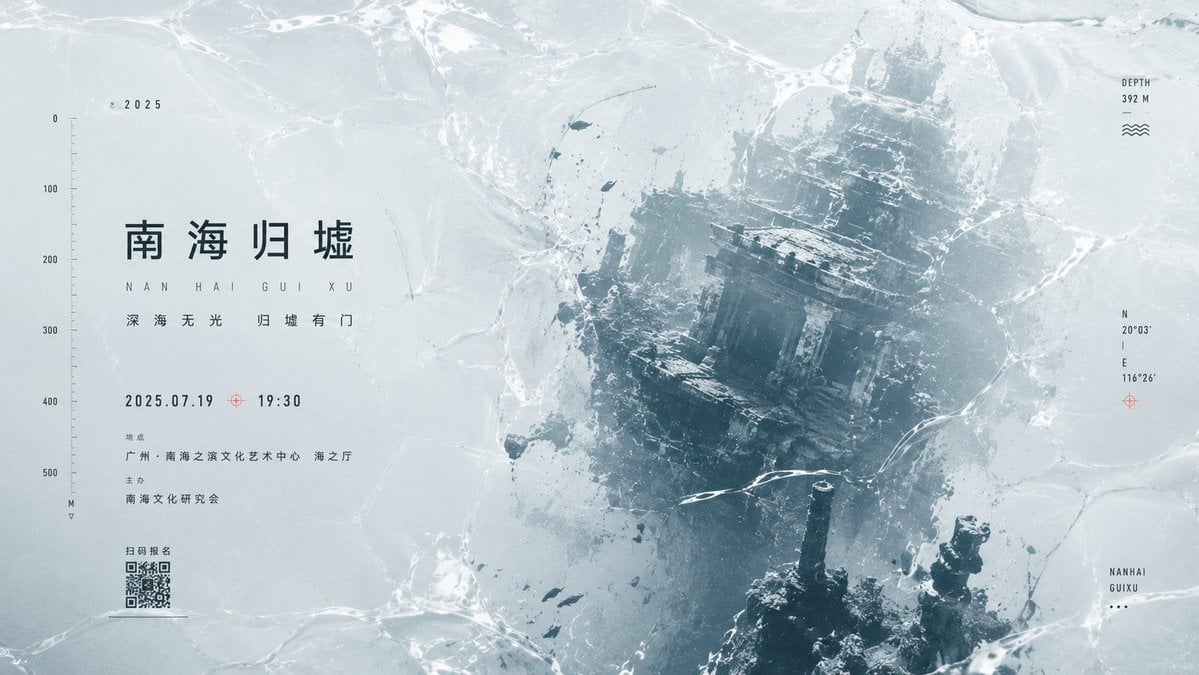
Minimalist Wet-Surface Event Poster

Generated Image Preview

Minimalist Wet-Surface Event Poster1 / 3
知识
知识猫图解
@GeekCatX
HomepageView original post
5.8KViewsMay 27, 2026
Model / Categories / LicenseGPT ImagePoster DesignCC BY 4.0

Brand Ad AI Image Prompt

Prompt

Generate a 16:9 horizontal event poster, a highly finished graphic design piece, not a typical promotional illustration. The image should resemble a printed event poster, viewed as if through a wet, transparent medium. Overall visual aesthetic: clear, restrained, wet, calm, graphic, low-noise, high-brightness, strong design sense. Avoid commercial tech templates, ordinary event backdrops, or complex illustrations. Strict 16:9 horizontal composition. A strong visual axis (left-aligned vertical, slight diagonal, or horizontal measurement axis) must organize the visual flow. A dense core of thematic recognition in the center, with the main subject's edges, bottom, or side cropped by the frame, implying extension beyond the canvas. No vertical poster composition, no symmetrical advertising layouts, no evenly filled frames. Translate the event theme into a low-detail, highly recognizable abstract subject. The subject should not be fully realistic, but compressed into: dark skeleton, negative space void, partial recognition edges, small low-brightness mass blocks, discontinuous outline directions, and cropped structural fragments. The subject must appear to emerge from within a large high-brightness main field, not merely pasted onto the background. The subject's edges must be intersected by a transparent medium, creating a slightly discontinuous, bent, floating, obscured, refracted, and swallowed effect. Subject details should be low-density, retaining only minimal structural information necessary for thematic recognition. The background is not a decorative texture, but a visible medium field derived from the event theme itself. Establish a large, high-brightness, low-noise main field, occupying 70% to 82% of the canvas. This main field must pass through the subject, text, and empty areas, forming a unified spatial layer. The background medium includes: transparent overlay, wet surface reflections, cyan-white light highlights, slight scan grain, soft fine creases, varying scales of field disturbance, local refraction arcs, and softened dark edges. These disturbances must cross the subject, text, and empty space; they cannot be confined to the background. Utilize a strict color hierarchy: High-brightness main color (70% to 82% for the main field), Low-brightness structural color (10% to 18% for the subject, thin lines, labels, and skeleton), Transparent light highlights (3% to 7% for medium arcs, refraction, and wet reflections), and a High-energy accent color (less than 1%, appearing only once). The high-energy color is exclusively for one small, key information node, such as a tiny circle annotation, short line trajectory, locator point, or time marker. It must not spread into a decorative system or create multiple emphasis points. Include necessary event information, but text must be restrained, technical, sans-serif, small-scale, with wide letter spacing. Text should resemble coordinates, indices, years, boundary labels, or measurement marks, not large commercial headlines. Text and image must occupy the same spatial layer, slightly pressed by the main field and transparent medium, not floating on top. Only use the following information for text, no extra gibberish: Event Name, Event Subtitle / Tagline, Date & Time, Location, Organizer, Registration Method / Website / QR Code Placeholder / Guest Information. Layout rules: Main title height 6% to 9% of frame height. Auxiliary text height 1.2% to 2.5%. Text concentrated near the strong axis, boundary lines, or bottom information strip. Small thin lines, numbers, scales, years, and coordinate symbols can be added. If the model cannot accurately generate readable text, leave clean text layout placeholder areas; do not generate pseudo-text, gibberish, or meaningless characters. Place the single high-energy accent color annotation on one key small information node. This node can be near the date, entrance, theme core edge, or image axis intersection. Its area must be less than 1% of the total image, like a precise marker, not a visual decoration. The image should have a flat print texture, but viewed through a wet, transparent surface. Retain slight scan grain, fine creases, soft cyan-white highlights, low-noise paper texture, transparent overlay, and refracted edges. Dark structural edges are softened by the medium; highlights must not overpower the subject's hierarchy. Overall clean, calm, ample negative space, clear graphic order. Forbidden: No fully realistic subjects, no complex illustration details, no ordinary event backdrops, no neon tech templates, no large areas of high-saturation gradients, no decorative pattern backgrounds, no multiple high-energy accent annotations, no oversized text, no meaningless gibberish text, do not make the background an independent decorative texture, subject must not appear pasted on the background, no messy, crowded, or overly flashy compositions. The output must resemble a horizontal event poster completed by a single senior visual designer. The image should satisfy: 1. Clear 16:9 horizontal format. 2. Clear strong axis. 3. Large main field area. 4. Low-detail but recognizable subject. 5. Medium passing through subject and text. 6. Restrained, clear, informative text. 7. Only one high-energy accent point. 8. Overall clear, wet, calm, graphic, and highly finished. Style keywords: high-key graphic poster, restrained editorial design, translucent wet surface, abstract dark structural silhouette, negative space, low-noise field, technical sans-serif typography, micro annotation, print texture, cyan-white highlights, cinematic flat composition, premium event visual identity

Use this Prompt