ColabaseAI logoColabaseAI logoColabaseAI
  • Inspiration
  • History
  • Assets
  • Favorites
  • Generate
  • All Prompts
  • World Cup
  • Product & Brand
  • Poster Design
  • Photography
  • Illustration & 3D
  • Food & Drink
  • UI & Graphic
Terms of Service·Privacy Policy
Prompt

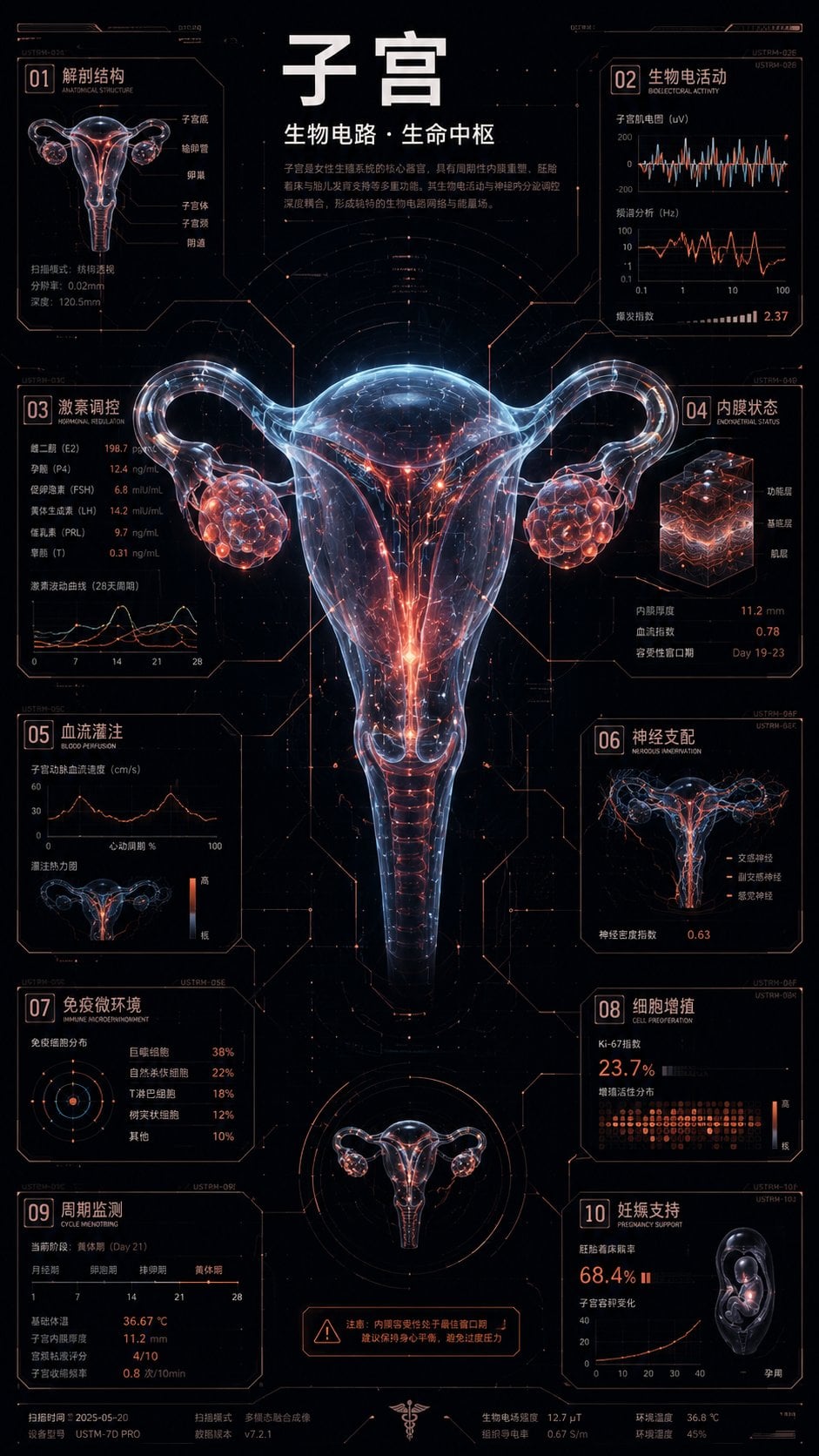
Cybernetic Tulip Infographic

Generated Image Preview

Cybernetic Tulip Infographic1 / 3
知识
知识猫图解
@GeekCatX
HomepageView original post
9.6KViewsJun 22, 2026
Model / Categories / LicenseGPT ImageIllustration & 3DPoster DesignUI & GraphicCC BY 4.0

Infographic AI Image Prompt

Prompt

Cybernetic translucent bio-luminescent floral concept infographic, 9:16 vertical aspect ratio. At the center is an ultra-realistic 3D cybernetic flower, suspended in a cold black futuristic laboratory void. Petals and leaves have a translucent frosted glass texture, with subsurface scattering, X-ray vision effect, thin-film refraction, and microscopic water droplets; internal plant veins transform into PCB circuits, optical fibers, glowing capillaries, and energy fluids. Maintain realistic plant structure: 65% organic life, 35% digital circuitry. Employ a "star-satellite" composition: The central 3D flower occupies approximately 30%, with the surrounding 70% dedicated to a high-density 2D HUD information system. Ten independent data modules are precisely arranged at the screen edges, strictly aligned to a hidden grid, connected to petals, leaf veins, stems, stamens, and circuit nodes by 0.5pt ultra-fine lines and 90-degree mechanical polyline connectors. Modules embed miniature bar charts, waveforms, spectral curves, contour profiles, topological nodes, and dot matrix scales. Visual style: Ultra-realistic bio X-ray rendering × austere orthogonal HUD interface × futuristic plant experimental archive. Background is an almost black infinite void, with extremely faint digital grain, scanlines, dot matrix grid, and volumetric fog. The main subject seamlessly blends into the background without a frame, while the peripheral UI uses hard-edged modular cuts. Avoid common game interfaces, cheap cyberpunk aesthetics, cartoon textures, and random mechanical part collages. Color theme: {Theme Name}. * Background base: {Dark Background}. * Translucent structural color: {Low Saturation Glass Color}. * Main bio-luminescent color: {Main Color}. * Auxiliary bio-luminescent color: {Auxiliary Color}. * Sole accent color: {Accent Color}. * Technical text color: {Text Color}. Color rules: Background and structural colors account for approximately 60%, main and auxiliary bio-luminescent colors for approximately 30%, and the accent color for only 5%—10%. A maximum of two bio-luminescent colors and one accent color across the entire image. The accent color is strictly used for stamen energy cores, circuit nodes, critical arrows, dangerous parameters, and data peaks; large-area use is prohibited, as is random rainbow gradient. Font uses condensed technical document typography. A super-large bold title, approximately 64px, is placed at the top. The 10 modules use monospace subtitles, technical sans-serif body text, and high-density micro-text. Text gradually becomes denser from the center towards the edges, without obscuring the main subject, and no garbled large characters. Subject color mapping: Petal bodies use the transparent structural color, petal edges and leaf veins use the main bio-luminescent color, internal fine veins and optical fibers use the auxiliary bio-luminescent color, and PCB intersection nodes and stamen cores exclusively use the accent color. Peripheral HUD brightness must not exceed that of the central flower. High detail, cinematic lighting, realistic refraction, volumetric glow, sharp edges, precise typography, print-grade quality, unified composition, extremely high information density. Subject: Tulip.

Use this Prompt